SEO vs Performance Marketing: How They Work Together in 2026
SEO performance marketing combines organic search and paid ads into one growth engine. Learn what performance marketing is, how it differs from SEO, which channels to use, and how to build a strategy that actually converts.
- 01What is performance marketing?
- 02Performance marketing vs digital marketing
- 03What is SEO performance marketing?
- 04Performance marketing channels in 2026
- 05Performance marketing strategy: a 7-step framework
- 06Performance marketing metrics that actually matter
- 07Performance marketing examples (real-world)
- 08SEO vs Performance Marketing: a direct comparison
- 09How to learn performance marketing in 2026
- 10Quick FAQ
- 11Ready to apply this?
We'll email you our Performance Marketing Setup Checklist instantly.
No spam. Unsubscribe anytime.
If you are trying to build a marketing engine that brings consistent, measurable growth, you have probably heard two terms repeatedly: SEO and performance marketing. Individually, both are powerful. Together, they are the difference between a business that constantly buys traffic and a business that owns its audience.
This guide explains SEO performance marketing — how search engine optimisation and paid performance marketing work together, what makes them different, and how to build a strategy that actually converts. This is the same framework we use inside our 6-week live performance marketing course.
What is performance marketing?
Performance marketing is digital advertising where you pay only for a measurable result.
That result could be a click, a lead, a download, an app install, or a sale. Instead of paying for impressions or reach, you pay for outcomes. This is the single biggest difference between performance marketing and traditional brand advertising.
A typical performance marketing campaign has four parts:
- Platform — Google Ads, Meta Ads, YouTube, LinkedIn, affiliate networks, or native ad platforms.
- Objective — leads, purchases, sign-ups, bookings, or app installs.
- Tracking — pixels, server-side events, GA4, CRM webhooks, and attribution models.
- Optimisation loop — the platform's algorithm learns which audiences, creatives, and keywords convert, then shifts budget toward them.
This model is why global digital advertising spend crossed $400 billion in 2025 (Statista) and why every Indian D2C brand, SaaS company, coaching business, and agency now runs paid campaigns as a primary growth channel.
If you cannot answer the question "what exact action am I paying for?" in one sentence, you are not running performance marketing. You are running branded advertising with a tracking pixel attached.
Performance marketing vs digital marketing
People often confuse these two terms. Here is the clean distinction:
| Digital Marketing | Performance Marketing |
|---|---|
| Umbrella for all online marketing | Subset focused on paid, measurable channels |
| Includes SEO, content, email, organic social | Focused on Google Ads, Meta Ads, YouTube, affiliates |
| Success measured by traffic, engagement, brand lift | Success measured by CPA, ROAS, LTV, CVR |
| Longer time horizon (3–12 months) | Real-time optimisation (daily or weekly) |
| Often executed by a team of specialists | Small team, high leverage per marketer |
Performance marketing is the fastest path to measurable revenue. SEO is the path to long-term, compounding traffic. The best marketers learn to do both.
What is SEO performance marketing?
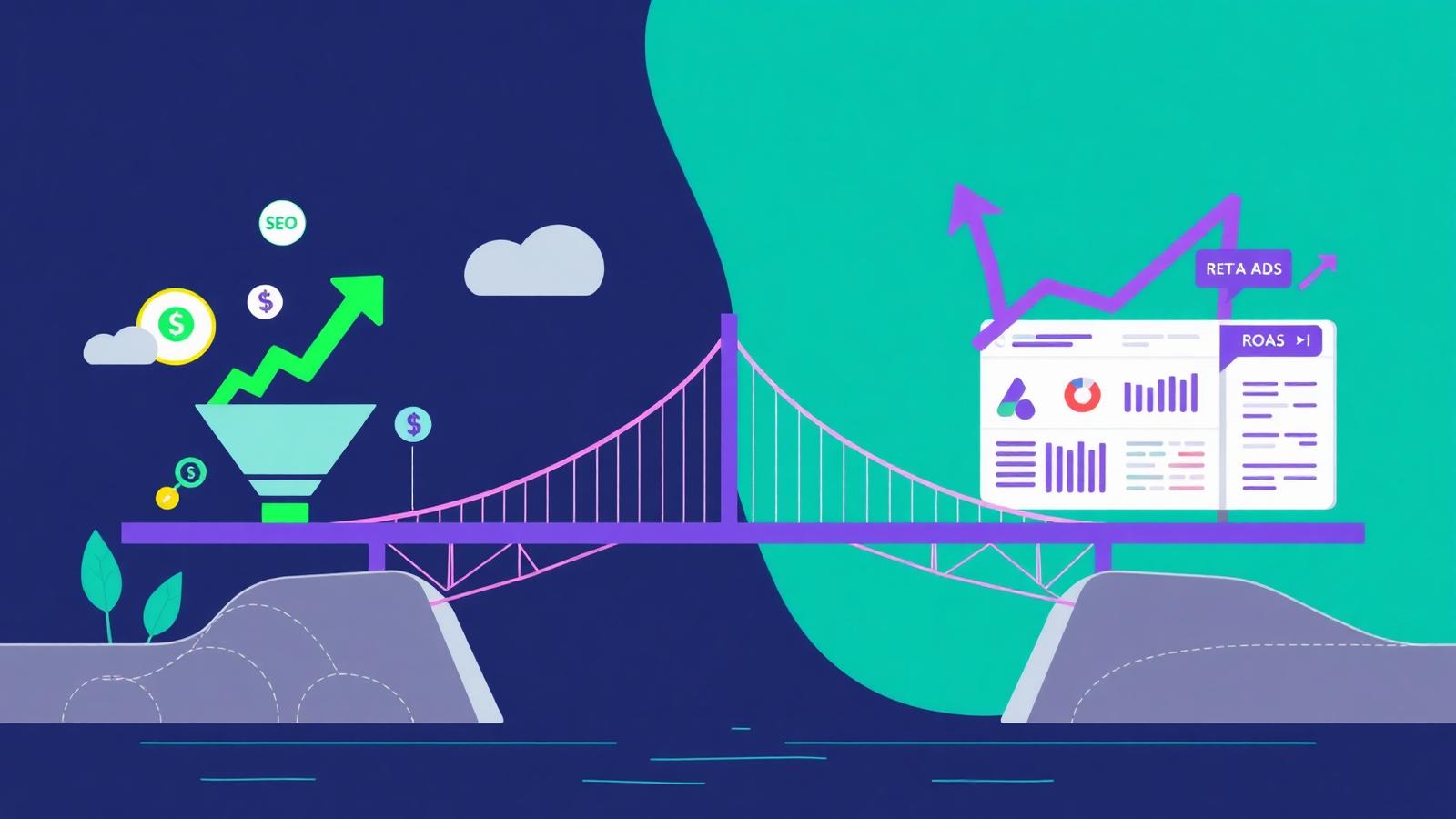
SEO performance marketing is the deliberate combination of organic search and paid ads into a single funnel.
SEO brings in people who are actively searching for answers. Performance marketing captures them at the moment they are ready to act. When the two work together, each makes the other stronger:
- SEO content warms up the audience. A blog post answers "what is performance marketing" and ranks for thousands of searches per month. Readers who do not convert immediately become retargeting audiences on Meta and Google.
- Performance marketing speeds up learning. A paid ad campaign quickly tells you which messaging, offer, and creative converts. That insight feeds back into SEO titles, meta descriptions, and landing page copy.
- Combined data improves targeting. Search query data from Google Ads reveals keyword intent that SEO teams can use for content planning. SEO analytics shows which content topics create the highest-value audiences for paid campaigns.
SEO is not free. It requires time, content, technical work, and often backlinks. Performance marketing is not instant profit. It requires testing, tracking, and budget discipline. The magic happens when you invest in both with a shared strategy.
Performance marketing channels in 2026
Not every channel is right for every business. The right mix depends on your audience, offer, and budget.
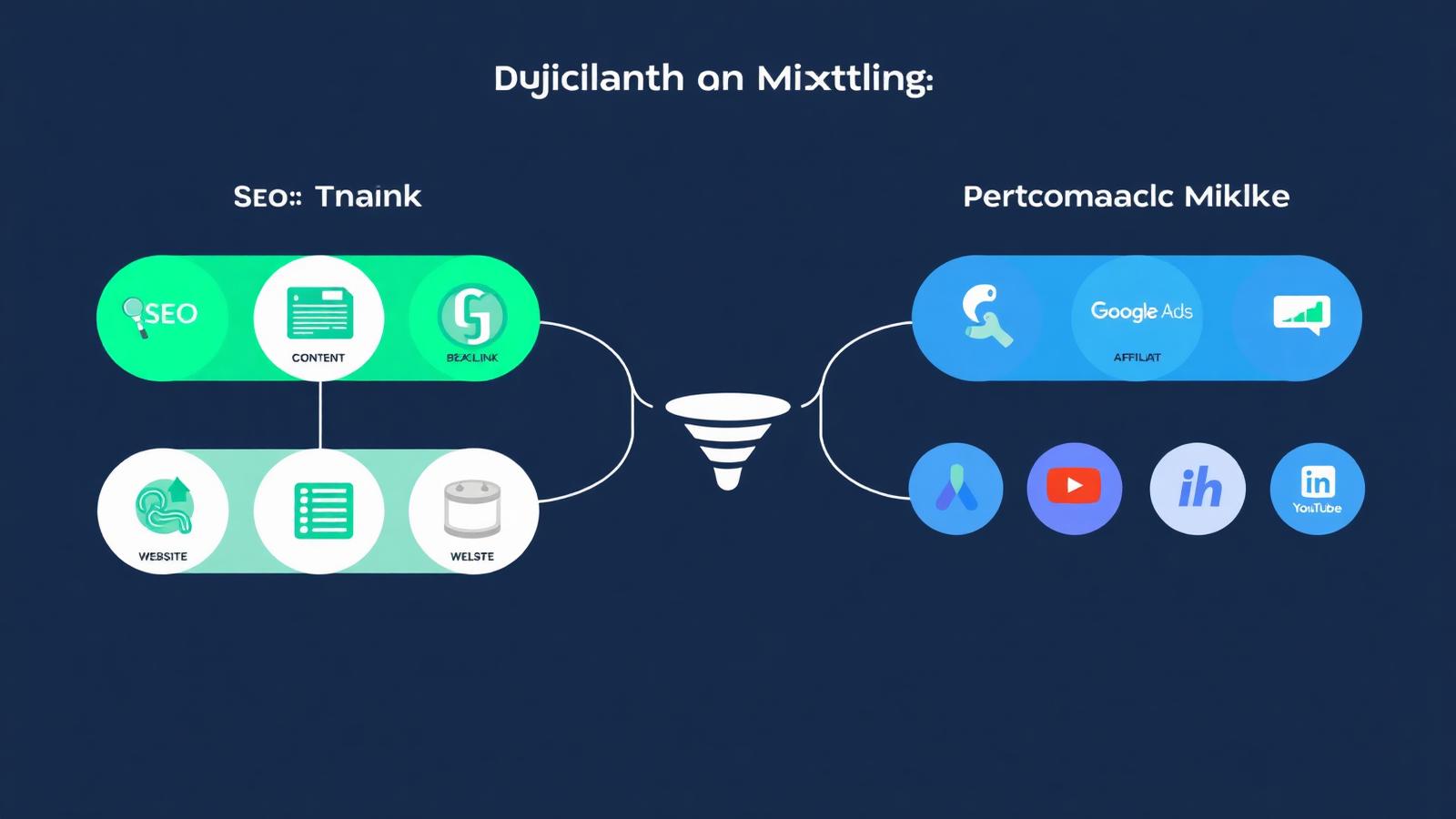
Google Ads
Google is still the king of intent capture. The main campaign types are:
- Search — bid on keywords like "performance marketing course in Hyderabad" or "best digital marketing course online". High intent, high CPC.
- Shopping — product-listing ads for ecommerce brands, driven by Google Merchant Center.
- Performance Max — Google's AI-driven cross-channel campaign that runs across Search, Shopping, YouTube, Display, and Gmail from one asset group.
- Display — banner ads across the Google Display Network. Cheap impressions, low intent, useful for remarketing.
- YouTube — skippable in-stream, Demand Gen, and Shorts ads. Excellent for consideration and remarketing.
Meta Ads (Facebook + Instagram)
Meta is best for D2C, lead generation, and full-funnel awareness-to-conversion campaigns. Advantage+ Shopping campaigns use AI to automate audience, placement, and creative decisions. A well-fed Advantage+ setup consistently beats a manual campaign in 2026.
LinkedIn Ads
Expensive in India (₹200–800 CPC) but unbeatable for B2B lead generation. Best for SaaS, agencies, enterprise services, and high-ticket consulting.
Affiliate and Native Ads
You pay only when someone converts. This is true performance marketing at scale. Once your funnel is proven, affiliate networks like Impact, CJ Affiliate, and vCommission can drive volume with minimal upfront risk.
SEO as a channel
SEO sits slightly outside the paid model but plays a critical role. Blog posts, pillar pages, and landing pages built for search capture high-intent traffic for years without incremental cost per click.
Don't start with five channels at once. Master one paid channel (Google Search or Meta) plus one SEO content pillar before diversifying. Depth beats breadth in the first 12 months.
Performance marketing strategy: a 7-step framework
Here is a practical framework you can apply to any business:
- Map the customer funnel. Identify search questions at awareness, consideration, and decision stages. Use SEO for awareness, paid ads for decision.
- Audit your current assets. Review existing content, landing pages, ad accounts, and tracking. Fix broken measurement first.
- Set one measurable objective. Pick leads, sales, sign-ups, or pipeline. Attach a target CPA or ROAS based on your gross margin.
- Choose the right channel mix. Google Search for high intent, Meta for scale and retargeting, YouTube for consideration, LinkedIn for B2B, SEO for compounding traffic.
- Install clean tracking. GA4, GTM, Meta Pixel, Conversions API, and Enhanced Conversions. Without this, every optimisation is a guess.
- Create content and landing pages. Match the ad creative to the landing page. Build SEO articles that capture top-of-funnel searches.
- Launch, measure, and iterate. Start small, measure daily, scale what works, kill what does not.
This framework is exactly what we teach in the PMAcademy performance marketing course, with live client projects and 1-on-1 mentorship.
Performance marketing metrics that actually matter
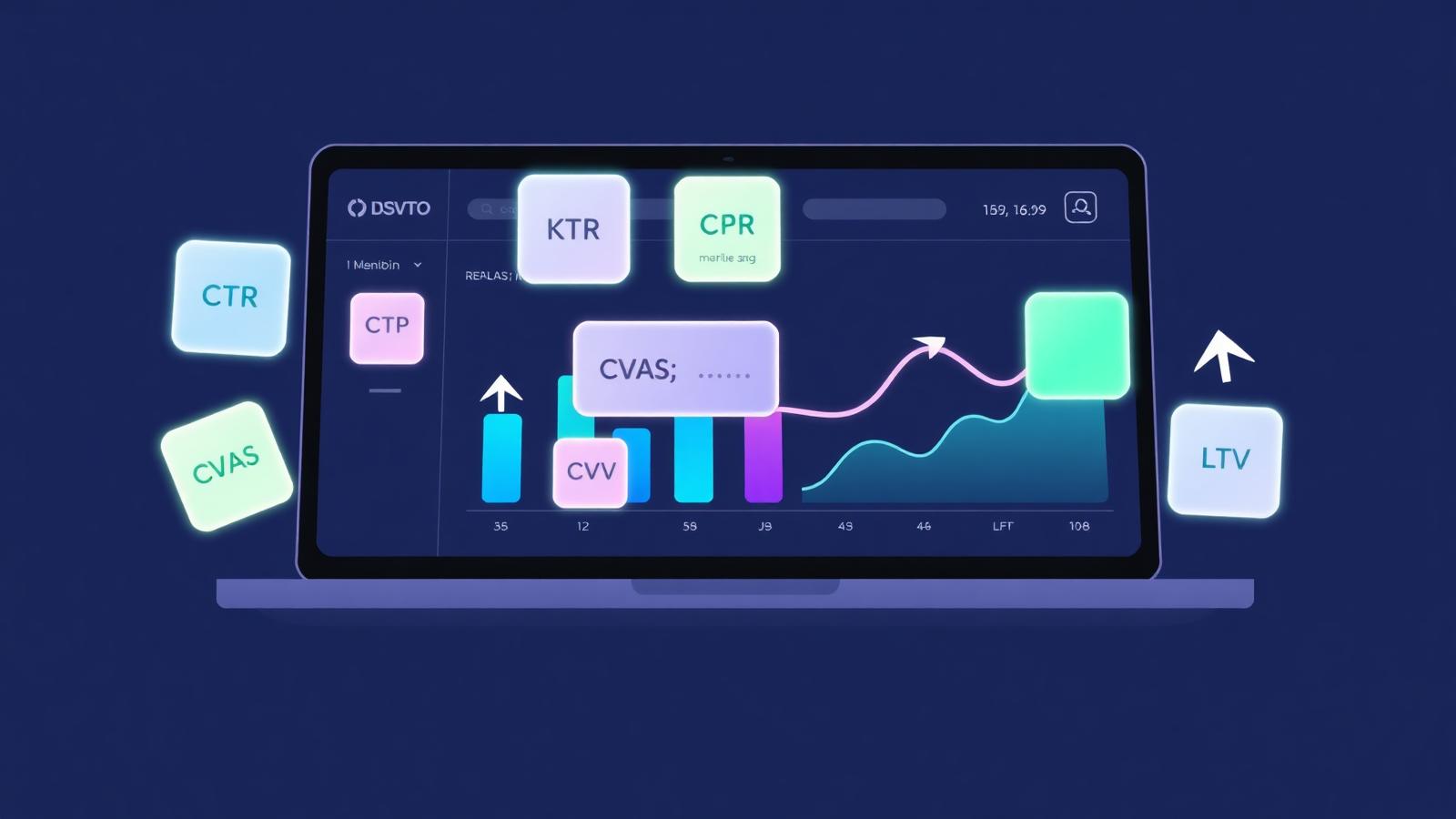
The metrics below are the language of performance marketing. Learn them before you spend a rupee on ads.
| Metric | What it measures | Why it matters |
|---|---|---|
| CPC | Cost per click | Efficiency of traffic buying |
| CTR | Clicks ÷ impressions | Creative and message relevance |
| CPA / CPL | Cost per acquisition or lead | Core cost-efficiency metric |
| CVR | Conversions ÷ clicks | Landing page and offer quality |
| ROAS | Revenue ÷ ad spend | Direct revenue return from ads |
| LTV | Total customer revenue over time | Long-term profitability |
| LTV:CAC | Lifetime value ÷ acquisition cost | Overall business health |
Junior marketers obsess over CPC. Senior marketers obsess over LTV:CAC. That shift is the difference between a ₹4 LPA and a ₹15 LPA performance marketer.
SEO metrics to track alongside
- Organic traffic — total visits from search.
- Keyword rankings — where you rank for target keywords.
- Click-through rate — from Google Search Console.
- Organic conversions — leads or sales from SEO traffic.
- Domain authority / backlinks — trust signals for long-term rankings.
When you combine these with paid metrics, you get a complete picture of what is working and what is wasting budget.
Performance marketing examples (real-world)
D2C ecommerce example
A skincare brand in India spends ₹50,000 on Meta Ads for a new product. The campaign generates 200 purchases at ₹250 CPA. Average order value is ₹1,200. Revenue is ₹2,40,000. ROAS = 4.8. Because the product margin is 50%, the break-even ROAS is 2. The campaign is profitable and can be scaled.
B2B lead generation example
A SaaS company runs LinkedIn Ads targeting marketing managers at mid-market companies. Cost per lead is ₹1,800. 10% of leads become opportunities, and 20% of opportunities close. Customer LTV is ₹5,00,000. The campaign is highly profitable even though the lead looks expensive upfront.
Local service business example
A Hyderabad-based digital marketing trainer runs Google Search ads for "performance marketing course in Hyderabad". Each click costs ₹45, and 5% of clicks fill the free masterclass form. Cost per lead is ₹900. 15% of leads buy the course. Customer acquisition cost is ₹6,000 against a course fee of ₹25,000. Highly profitable.
Coaching / edtech example
PMAcademy publishes SEO content like this article to attract people searching for "seo performance marketing" and related terms. Organic readers who do not sign up immediately are retargeted with Meta Ads promoting the free masterclass. The combined strategy lowers CPA because the audience already knows the brand.
SEO vs Performance Marketing: a direct comparison
| Factor | SEO | Performance Marketing |
|---|---|---|
| Time to results | 3–12 months | Hours to days |
| Cost model | Time and content investment | Pay per click or conversion |
| Risk | Lower upfront, slower feedback | Higher upfront, faster feedback |
| Control | Algorithm-dependent, less control | Full control over budget and targeting |
| Scalability | Compounds over time | Scales instantly with budget |
| Best for | Long-term authority and traffic | Immediate leads, sales, and testing |
| Key metric | Organic traffic, rankings, conversions | ROAS, CPA, CVR, LTV:CAC |
Why "SEO performance marketing" is the most powerful combination
SEO alone is slow. Performance marketing alone is expensive. Together, they solve each other's weaknesses:
- SEO reduces long-term dependence on paid traffic.
- Performance marketing validates messaging quickly and funds immediate growth.
- Retargeting SEO visitors with paid ads increases conversion rates.
- SEO insights from high-converting paid keywords improve content strategy.
This combination is what separates businesses that survive on ad spend from businesses that build durable marketing assets.
How to learn performance marketing in 2026
If you want to understand how AI search is changing organic visibility, read our guide to SEO vs AEO vs GEO.
There are two paths. The free path is slower but works if you are disciplined:
- Weeks 1–2 — Learn the vocabulary through Google Skillshop and Meta Blueprint free modules.
- Weeks 3–6 — Run a real campaign with ₹5,000 of your own budget on Google Ads or Meta Ads.
- Weeks 7–10 — Master GA4, GTM, Meta CAPI, and Enhanced Conversions.
- Weeks 11–12 — Build a portfolio with two case studies showing objective, budget, and results.
The faster path is a structured, live programme. Our AI-powered performance marketing course compresses all of this into 6 weeks with real client campaigns, peer groups, and direct mentorship from a trainer with 15+ years of industry experience.
You can also read our related guides:
- What is Performance Marketing? A Beginner's Guide
- ROAS Formula Explained: How to Calculate Return on Ad Spend
Quick FAQ
Is performance marketing hard to learn? The fundamentals are learnable in a few weeks. Mastery comes from running real campaigns with real budgets.
Do I need a marketing degree? No. Ad platforms and hiring managers care about results, not degrees.
Can I do this as a freelancer? Yes. Performance marketing freelancers in India often charge ₹15,000–₹1,00,000 per month per client depending on experience and results.
Ready to apply this?
The best way to learn SEO performance marketing is to run real campaigns under an instructor who has done it for over 15 years. The next batch of our performance marketing course online starts soon. Join the free masterclass on 2nd October to see the framework in action.
Glossary
- SEO (Search Engine Optimisation)
- The practice of improving organic visibility on search engines like Google through content, technical optimisation, and backlinks.
- Performance Marketing
- A digital advertising model where advertisers pay only for measurable results such as clicks, leads, or sales.
- SEM (Search Engine Marketing)
- Marketing through search engines, usually referring to paid search advertising such as Google Ads Search campaigns.
- CPC (Cost Per Click)
- The amount paid each time a user clicks an ad. A basic efficiency metric for paid traffic.
- CTR (Click-Through Rate)
- Clicks divided by impressions, expressed as a percentage. A proxy for creative relevance and message-market fit.
- CPA (Cost Per Acquisition)
- Total ad spend divided by the number of conversions. Measures the cost to acquire one customer or lead.
- ROAS (Return on Ad Spend)
- Revenue generated by ads divided by ad spend. A ROAS of 4 means ₹4 in revenue for every ₹1 spent.
- CVR (Conversion Rate)
- Conversions divided by clicks. A measure of landing page quality and offer strength.
- LTV (Lifetime Value)
- The total revenue a customer generates over their entire relationship with a business.
- LTV:CAC Ratio
- Lifetime value divided by customer acquisition cost. A healthy ratio indicates profitable, scalable growth.
Sources & Further Reading
Frequently Asked Questions
What is SEO performance marketing?+
SEO performance marketing is the practice of combining organic search engine optimisation with paid, results-driven advertising. SEO builds long-term, high-intent traffic; performance marketing delivers immediate leads and sales. Together, they create a full-funnel growth engine that reduces acquisition costs and increases conversions.
Is performance marketing the same as SEO?+
No. SEO is a subset of digital marketing focused on earning organic traffic from search engines. Performance marketing is a broader advertising model focused on paying for measurable outcomes across paid channels like Google Ads, Meta Ads, and affiliate networks. SEO can be one of the channels used inside a performance marketing strategy, but the two are not the same.
What is the difference between performance marketing and digital marketing?+
Digital marketing is the umbrella term for all online marketing, including SEO, content, email, social media, and paid ads. Performance marketing is a focused subset of digital marketing that only pays for measurable outcomes such as clicks, leads, or sales. Every performance marketing campaign is digital marketing, but not every digital marketing campaign is performance marketing.
What are the main performance marketing channels?+
The main performance marketing channels are Google Ads (Search, Shopping, Performance Max, Display, YouTube), Meta Ads (Facebook and Instagram), LinkedIn Ads for B2B, affiliate networks, and native ad platforms. SEO content supports every channel by answering questions at the top of the funnel and reducing reliance on paid traffic over time.
How do I start a performance marketing strategy?+
Start by defining one measurable objective, such as leads or sales. Choose the right channel for your audience and funnel stage. Install clean tracking with GA4, GTM, and pixels. Create matching landing pages and ad creative. Launch with a small budget, measure CPC, CTR, and CPA, then scale what works. A structured course like PMAcademy's 6-week performance marketing programme can compress this into real client campaigns with mentorship.
What is a good ROAS in performance marketing?+
A good ROAS depends on your gross margin. A brand with a 40% margin needs a 2.5x ROAS just to break even. Most ecommerce brands in India target 3–5x on prospecting and 5–10x on remarketing. Learn the exact formula in our guide to the [ROAS formula](/blog/roas-formula-explained).
Can small businesses do performance marketing?+
Yes. Small businesses can start with budgets as low as ₹5,000–₹10,000 per month on Google Search or Meta Ads. The key is to start with a specific offer, track conversions accurately, and optimise before scaling. SEO content can be added at zero ad cost once the paid funnel is proven.
Which is better for career growth: SEO or performance marketing?+
Both skills are valuable, but performance marketing usually offers faster salary growth because results are directly tied to revenue. Junior roles in India start at ₹3.5–6 LPA, mid-level roles at ₹8–15 LPA, and senior roles at ₹18–35 LPA. The highest-paid marketers combine SEO strategy with performance marketing execution.
Join our live training program and become a performance marketing professional.
Instant-download resources from the PMAcademy shop that pair with this guide.