25 E-Commerce Business Ideas You Can Start in India (2026) — By Budget
25 e-commerce business ideas for India in 2026, sorted by what you can invest — ₹0, under ₹10,000 and under ₹50,000. Real startup costs, honest margins, a 7-day validation method, marketplace vs own store, and an idea-picker quiz.
- 01How to read this list
- 02E-commerce business ideas you can start with ₹0
- 03E-commerce business ideas under ₹10,000
- 04E-commerce business ideas under ₹50,000
- 05What margin should you actually expect?
- 06How to validate an idea in 7 days for under ₹1,000
- 07Marketplace vs your own store
- 08Any of these ideas needs a store — build one in 60 minutes with AI
- 09Money and legal basics before you launch
- 10Your launch checklist
- 11Which idea should you actually pick?
We'll email you our Performance Marketing Setup Checklist instantly.
No spam. Unsubscribe anytime.
Everyone wants a list of e-commerce business ideas. Very few lists tell you what each one actually costs to start in India, what margin you can realistically keep, or how long it takes to get the first order.
This one does. The 25 ideas below are sorted by what you can invest — ₹0, under ₹10,000 and under ₹50,000 — with honest numbers for each. At the end there is an idea-picker that matches you to two or three of them, a validation method you can run in a week for under ₹1,000, and a launch checklist.
How to read this list
Every idea below carries four numbers:
- Startup cost — what you need to make the first sale, not a fantasy budget.
- Gross margin — what's left after the product cost, before ads and shipping.
- Time to first sale — realistic for someone with no existing audience.
- Main risk — the thing that actually kills this business.
Ignore the "earn ₹1 lakh a month" claims you see elsewhere. Your first month is about learning what sells; profit comes from repeating what worked.
E-commerce business ideas you can start with ₹0
No stock, no upfront cost. You pay with time and skill instead of money.
| # | Idea | Startup cost | Margin | First sale |
|---|---|---|---|---|
| 1 | Digital products (templates, planners, presets, prompt packs) | ₹0–₹1,000 | 90–98% | 1–2 weeks |
| 2 | Print-on-demand merchandise | ₹0–₹2,000 | 20–35% | 2–4 weeks |
| 3 | Dropshipping niche store | ₹0–₹5,000 | 15–30% | 2–4 weeks |
| 4 | Reselling from supplier catalogues | ₹0–₹2,000 | 10–25% | 3–10 days |
| 5 | Online course or coaching | ₹0–₹3,000 | 85–95% | 1–3 weeks |
| 6 | Freelance service store (design, ads, editing) | ₹0 | 80–95% | 3–10 days |
| 7 | AI product photo & content service | ₹0–₹2,000 | 70–90% | 1–2 weeks |
| 8 | Affiliate review store | ₹0–₹2,000 | commission | 4–8 weeks |
| 9 | WhatsApp catalogue business | ₹0–₹3,000 | varies | 3–7 days |
1. Digital products. Notion templates, Excel dashboards, wedding invitation designs, Lightroom presets, AI prompt packs, ebooks. Build once, sell forever. Our own AI photo editing prompt pack is exactly this model. Risk: getting discovered — you need content or ads.
2. Print-on-demand. You design; a partner prints and ships. Great for niche communities (engineering colleges, regional humour, fandoms). Risk: thin margins after the printer's cut.
3. Dropshipping. Still works in India, but only for specific products with a story — not generic gadget clones. Risk: long delivery times and returns you can't control.
4. Reselling. Source from Meesho or a wholesale supplier, sell in your own WhatsApp and Instagram circle. The fastest first sale on this list. Risk: no brand, no defensibility — treat it as training.
5. Online course or coaching. If you can teach anything — spoken English, tally, baking, guitar, Excel — you have a product. Risk: you need proof you can deliver results.
6. Freelance service store. Turn your skill into fixed packages with a Buy button: "Logo + 3 revisions — ₹4,999". Selling a fixed package converts far better than "contact for quote". Risk: it's a job until you hire.
7. AI product photo & content service. Small sellers desperately need better photos and videos. AI tools make delivery fast and margins high. Risk: you must be genuinely good, not just fast.
8. Affiliate review store. Build a comparison site for a category you know and earn commissions. Slow, but it compounds. Risk: SEO takes months.
9. WhatsApp catalogue business. Sell to your local circle first with a catalogue and UPI payments, then add a website. This is how a large share of India's small sellers actually start. Risk: doesn't scale past your contacts without ads.
If you have zero budget, start with a service or a digital product. You get paid before you spend, and the cash from your first five sales funds a physical product later.
E-commerce business ideas under ₹10,000
Real products, small batches, sold mostly on Instagram, WhatsApp and your own store.
| # | Idea | Startup cost | Margin | First sale |
|---|---|---|---|---|
| 10 | Handmade crafts & home decor | ₹5,000–₹10,000 | 40–60% | 2–4 weeks |
| 11 | Home-baked snacks & regional food | ₹6,000–₹10,000 | 35–55% | 1–3 weeks |
| 12 | Custom gifting & personalised products | ₹5,000–₹10,000 | 45–65% | 2–3 weeks |
| 13 | Plants, planters & garden kits | ₹7,000–₹10,000 | 40–60% | 2–4 weeks |
| 14 | Thrift & pre-loved fashion | ₹3,000–₹8,000 | 50–70% | 1–2 weeks |
| 15 | Phone accessories & small gadgets | ₹8,000–₹10,000 | 30–50% | 2–4 weeks |
| 16 | Handmade jewellery | ₹6,000–₹10,000 | 50–70% | 2–4 weeks |
| 17 | Stationery & study kits | ₹6,000–₹10,000 | 30–45% | 3–5 weeks |
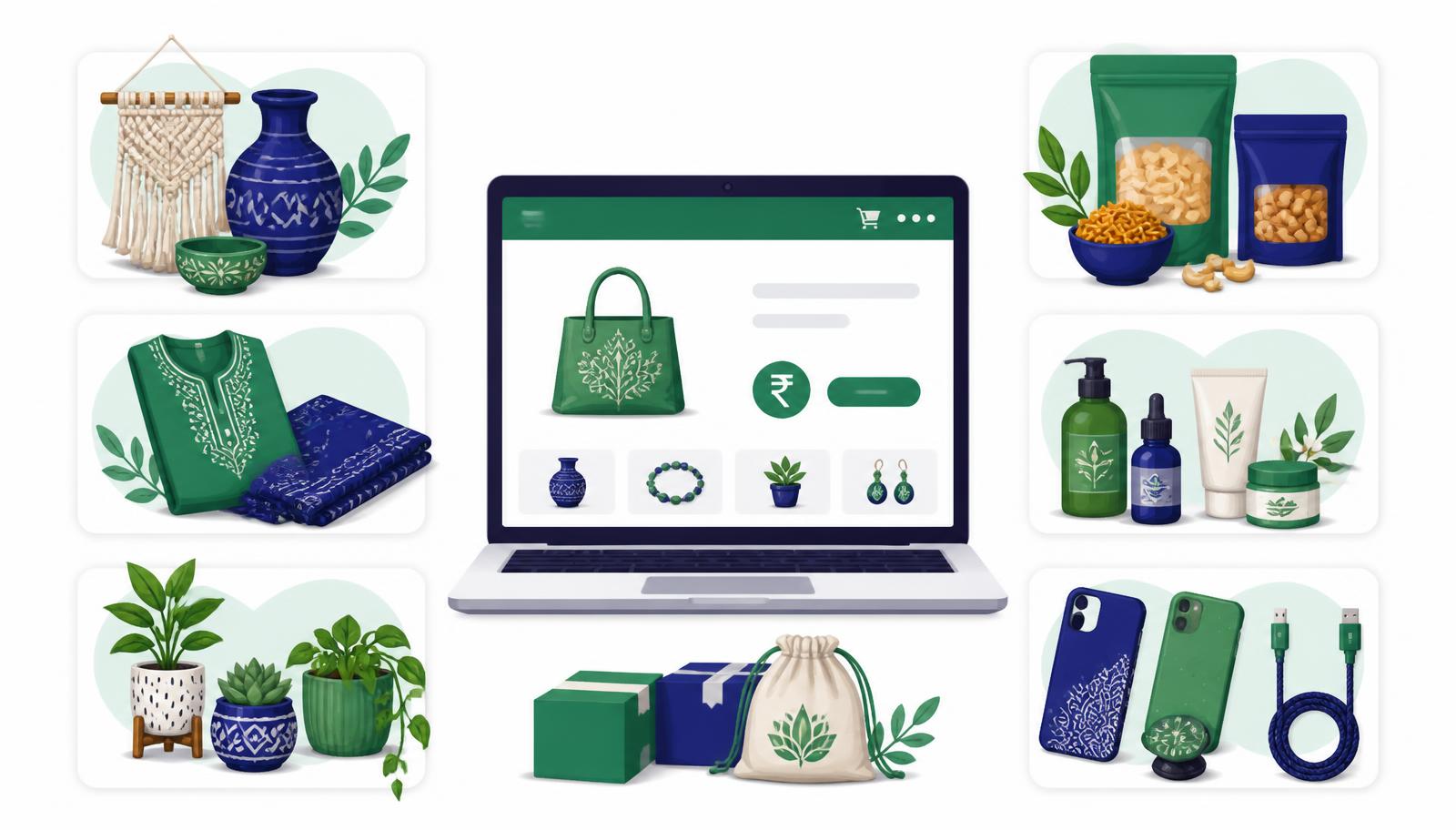
10. Handmade crafts & home decor. Macramé, terracotta, resin art, block-printed textiles. India's craft supply is unbeatable and gifting demand is year-round.
11. Home-baked snacks & regional food. Millet snacks, pickles, filter coffee, festival sweets. Repeat purchase is the highest of any category here — but you need an FSSAI registration and honest shelf-life labelling.
12. Custom gifting. Personalised mugs, name frames, corporate hampers. Personalisation is the cheapest way to escape price comparison.
13. Plants & garden kits. Cheap to source, high perceived value, and the content practically makes itself. Packaging for transit is the skill to learn.
14. Thrift & pre-loved fashion. Lowest sourcing cost, highest margin in fashion, and a young audience that prefers it. Photography is the whole business.
15. Phone accessories. Light, cheap to ship, endless restock from local wholesale markets. Margins are squeezed unless you niche down (e.g. accessories for one phone model or one aesthetic).
16. Handmade jewellery. Tiny parcels, low shipping cost, 50–70% margins, and photos do the selling.
17. Stationery & study kits. Predictable exam-season demand and easy bundling — a "NEET study kit" sells better than the same items listed separately.
E-commerce business ideas under ₹50,000
This is where you stop reselling and start building a brand you own.
| # | Idea | Startup cost | Margin | First sale |
|---|---|---|---|---|
| 18 | Private-label D2C brand | ₹25,000–₹50,000 | 45–70% | 4–8 weeks |
| 19 | Beauty & skincare brand | ₹30,000–₹50,000 | 55–75% | 6–10 weeks |
| 20 | Apparel / streetwear label | ₹30,000–₹50,000 | 40–60% | 4–8 weeks |
| 21 | Packaged health foods & supplements | ₹35,000–₹50,000 | 40–60% | 6–10 weeks |
| 22 | Pet supplies & treats | ₹20,000–₹45,000 | 35–55% | 3–6 weeks |
| 23 | Home furnishing & decor brand | ₹30,000–₹50,000 | 40–60% | 4–8 weeks |
| 24 | Fitness gear & accessories | ₹25,000–₹50,000 | 30–50% | 3–6 weeks |
| 25 | B2B bulk supply store | ₹30,000–₹50,000 | 15–30% | 4–8 weeks |
18. Private-label D2C. A manufacturer makes it, your brand goes on it. The classic path for Indian D2C brands — start with one hero product, not a catalogue.
19. Beauty & skincare. The best margins in physical retail, but budget for compliance, safe formulation partners and packaging that survives courier handling.
20. Apparel / streetwear. Small batch runs plus print-on-demand for long-tail sizes keeps inventory risk low. Returns are the category's tax — size charts matter.
21. Packaged health foods. Millet mixes, protein snacks, cold-pressed oils. Subscription-friendly with genuinely strong repeat revenue. FSSAI mandatory.
22. Pet supplies. One of the fastest-growing categories in Indian metros, with unusually loyal, high-frequency buyers.
23. Home furnishing & decor. High average order value offsets bulkier shipping. Works best with a clear aesthetic point of view.
24. Fitness gear. Easy to source, and content marketing does most of the selling. Compete on community, not price.
25. B2B bulk supply. Packaging material, housekeeping supplies, uniforms, printing. Lower margin, far bigger orders, and repeat buyers who don't churn on a discount.
Two taps — your budget and your interest — and you get matched ideas with real costs and margins.
What margin should you actually expect?
| Category | Realistic gross margin | Notes |
|---|---|---|
| Digital products & courses | 85–98% | No stock, no shipping, no returns |
| Services (design, ads, content) | 80–95% | Your time is the cost |
| Beauty & skincare | 55–75% | High margin, high compliance cost |
| Jewellery, handmade, thrift | 50–70% | Photography-driven |
| Custom gifting | 45–65% | Personalisation blocks price comparison |
| Food & snacks | 35–55% | Wastage and shelf life eat into it |
| Apparel | 40–60% | Returns can cost 5–15% of revenue |
| Home decor & furnishing | 40–60% | Shipping cost is the variable |
| Pet supplies | 35–55% | Strong repeat rates |
| Fitness gear, accessories | 30–50% | Price-compared heavily |
| Dropshipping | 15–30% | You control neither cost nor delivery |
| B2B bulk | 15–30% | Volume business, not margin business |
Remember: gross margin is not profit. Take out ads (often 10–25% of revenue at the start), shipping, packaging, payment fees (~2%) and returns, and a 50% gross margin can easily become 15% net. Price accordingly.
If your gross margin is under 35%, paid ads will almost certainly lose you money at the start. Those ideas need organic content, marketplaces or word of mouth first.
How to validate an idea in 7 days for under ₹1,000
Do not buy stock until you have done all five of these.
- Check search demand. Is anyone searching for this product in India? A category nobody searches for needs you to create demand — much slower and more expensive.
- Price-check the marketplaces. Search your product on Amazon, Flipkart and Meesho. If 40 sellers are within ₹20 of each other, you need a differentiator — a niche, a bundle, or a brand.
- Have 10 real conversations. Message ten people who fit your buyer. Ask what they use today, what annoys them and what they'd pay. If nobody says a number, you don't have a product yet.
- Run a ₹500 test. One simple ad or one organic post to a landing page with a Buy button. Clicks tell you the interest is real; a checkout attempt tells you the price is right.
- Take pre-orders. The only real validation is money. Five paid pre-orders beat five hundred likes.
If steps 3–5 fail, change the product — not the logo.
Marketplace vs your own store
| Marketplace (Amazon / Flipkart / Meesho) | Your own store | |
|---|---|---|
| Customers | They bring them | You bring them |
| Fees per sale | 15–30% | ~2% payment gateway |
| Customer data | Theirs | Yours |
| Brand control | Almost none | Complete |
| Setup time | Days (GST needed) | ~60 minutes with AI |
| Price competition | Brutal | On your terms |
| Best for | Validating demand fast | Margin, repeat sales, brand |
The right answer for almost everyone is both. Use a marketplace to prove people want the product. Use your own store to keep the profit, collect phone numbers and WhatsApp buyers when the next batch lands.
If you're still deciding what to build on, read our comparison of e-commerce platforms in India and the full cost breakdown of building a store. Once you have picked an idea, our guide to building an e-commerce website using AI without coding takes you from prompt to live store with payments. Leaning towards a zero-inventory start? Our complete guide to digital products covers the 12 types, 60+ ideas and how to price them.
Any of these ideas needs a store — build one in 60 minutes with AI
Ten years ago, the website was the expensive part. It isn't anymore. With AI tools you describe your store in plain English — products, cart, checkout, WhatsApp button — and it gets built while you watch. No coding, no developer, no monthly platform rent.
That is exactly what we teach in the AI E-Commerce Website Course: build a complete, live store with Lovable, ChatGPT and Claude in about 60 minutes, wire up Razorpay payments, generate AI product photos, and run your first Meta lead-gen ads. Recorded ₹1,499, live batch ₹4,999.
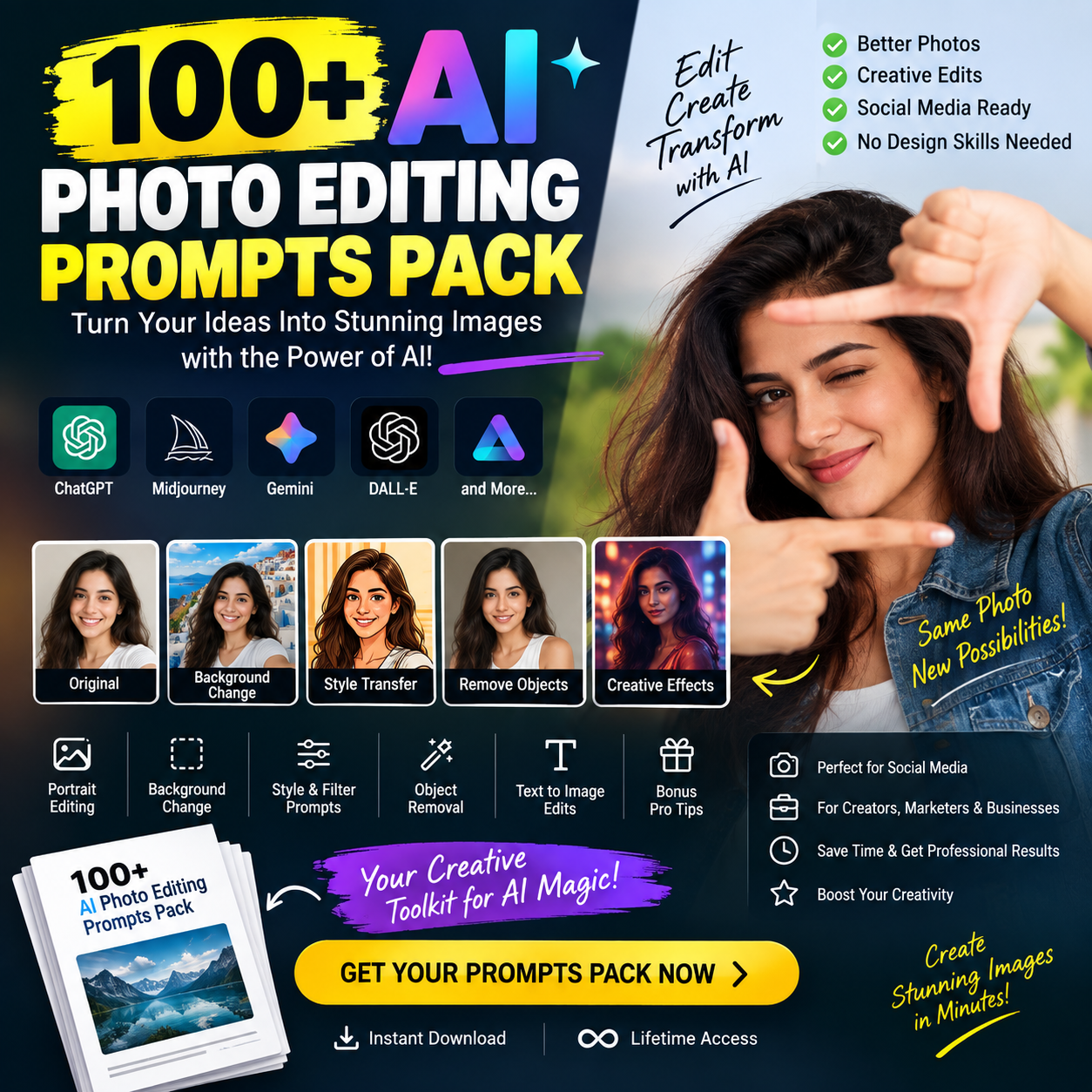
100+ AI Photo Editing Prompts Pack (Instant Download)
Copy-paste prompts for ChatGPT & Gemini photo edits
- 100+ copy-paste prompts across 8 categories: portraits, Instagram trends, backgrounds, product shots, restoration, creative styles, text-on-image and ad creatives
- The 6-part prompt formula with worked examples
- Follow-up prompts to fix likeness, lighting and background issues
- Aspect-ratio cheat sheet for every social and ad placement
Look inside
Secure Razorpay checkout One-time payment, lifetime accessInstant download
Money and legal basics before you launch
- GST — mandatory for marketplace selling; for your own store it depends on turnover and category. Verify current thresholds before you launch.
- FSSAI — required for anything edible, including home kitchens.
- Payment gateway — Razorpay, Cashfree or PayU, roughly 2% per successful transaction, UPI included.
- Shipping — an aggregator (Shiprocket, Delhivery and similar) gives you multiple couriers and better rates than a direct tie-up at low volume.
- COD — most Indian buyers still want it, but plan for refused parcels. Many sellers charge a small COD fee or take a ₹50 partial prepayment to cut RTO.
- Returns policy — write it before your first order, not after your first argument.
No signup, instant score. Answer all 6 and check where you stand.
Your launch checklist
Work through these in order. Tick them off as you go — your progress is saved on this device.
Ticks are saved in this browser — come back and pick up where you left off.
Which idea should you actually pick?
Three honest filters:
- Can you talk about it for a year? Content is how these businesses grow, and you'll produce a lot of it.
- Can you get your first ten customers without ads? If not, your costs start on day one.
- Does the margin survive ads and returns? Below 35% gross margin, you need organic demand first.
Pick one idea. Validate it in a week. Build the store in an hour. Then spend your energy on the only thing that matters — getting the first ten orders.
Next steps: read how to start an e-commerce business in India, our dropshipping in India guide, and how to choose an e-commerce course.
Glossary
- D2C (Direct to Consumer)
- Selling your own branded product straight to buyers through your website, instead of through distributors or retailers.
- Private Label
- A manufacturer makes a standard product and puts your brand on it. The fastest way to own a brand without owning a factory.
- Dropshipping
- You list products you don't stock. When an order comes in, your supplier ships it directly to the customer. Low risk, thin margins.
- Print on Demand
- T-shirts, mugs and posters printed only after a customer orders, by a partner who also ships them. No inventory required.
- Gross Margin
- What is left from the selling price after the cost of the product itself, before ads, shipping and fees.
- AOV (Average Order Value)
- Total sales divided by number of orders. Raising it is usually easier than finding more customers.
- RTO (Return to Origin)
- A cash-on-delivery parcel the customer refuses, which comes back to you. You still pay both courier legs — the biggest hidden cost in Indian e-commerce.
- FSSAI Licence
- The food safety registration required in India to sell any edible product, including home-made snacks.
- GST
- Goods and Services Tax. Required to sell on Amazon, Flipkart and most marketplaces, and above turnover thresholds for your own store.
- Validation
- Proving people will pay before you spend on stock — through demand data, conversations, pre-orders or a small ad test.
Sources & Further Reading
Frequently Asked Questions
Which e-commerce business is best to start in India with no money?+
Digital products are the best zero-investment option: templates, planners, presets, prompt packs or an online course. You create the file once, sell it unlimited times, and margins are 90% or higher because there is no stock, courier or return. Close behind are print-on-demand, reselling from supplier catalogues and productised freelance services — all of which let you make a first sale before you spend anything.
Which e-commerce business has the highest profit margin in India?+
Digital products (90–98%) and services (80–95%) beat every physical category. Among physical goods, beauty and skincare (55–75%), handmade jewellery and crafts (50–70%) and custom gifting (45–65%) are the strongest. Electronics, phone accessories and B2B bulk supply are the weakest at 15–30%, because buyers compare prices easily.
How much money do I need to start an e-commerce business in India?+
You can genuinely start at ₹0 with digital, dropshipping or print-on-demand. A small physical product business needs ₹5,000–₹10,000 for first stock, packaging and a domain. A private-label brand with your own packaging, product photos and initial ad budget realistically needs ₹25,000–₹50,000. Website cost is no longer the barrier it once was — an AI-built store costs little more than a domain.
Do I need GST registration to sell online in India?+
Yes if you want to sell on Amazon, Flipkart or most marketplaces — they require a GSTIN before you can list. For your own website, registration is driven by turnover thresholds and your product category, and some categories require it from the first sale. Check the current rules on the official GST portal or with a CA before you launch, because they change.
Should I sell on a marketplace or build my own store?+
Do both, in that order of effort. Marketplaces bring you buyers on day one, which is the fastest way to learn whether your product sells — but they take 15–30% and keep the customer relationship. Your own store costs around 2% in payment gateway fees, keeps the buyer's contact details for repeat sales, and is where your margin actually lives. Most profitable Indian sellers use marketplaces for discovery and their own site for profit.
How long does it take to get the first sale?+
Digital products and services can sell within days if you already have an audience. Reselling and marketplace listings typically take one to three weeks. A new private-label brand usually needs four to eight weeks — sourcing, packaging, photos and the first ad tests all take time. Anyone promising sales in 48 hours is selling you a course, not a business.
What is the cheapest way to get a website for these business ideas?+
Build it yourself with AI. Instead of paying an agency ₹40,000+ or renting a SaaS platform monthly, you can describe your store in plain English and have a working site with product pages, cart and Razorpay checkout in about 60 minutes. Our AI e-commerce course teaches exactly that, and you own the result. See the full price comparison in our e-commerce website cost breakdown.
Which e-commerce business idea is best for students in India?+
Something with zero inventory and flexible hours: digital products, print-on-demand, a freelance service store or an AI product-photo service. They cost nothing to start, teach you selling, payments and ads, and the portfolio you build is worth more in interviews than another certificate.
Join our live training program and become a performance marketing professional.