What Are Digital Products? Types, Examples & 60+ Ideas (2026)
A complete guide to digital products in 2026: what they are, the 12 main types with examples, 60+ digital product ideas with realistic ₹ prices, margins, how to create and price one, where to sell it, and GST rules for selling digital goods in India.

- 01What is a digital product?
- 02Digital products vs physical products
- 03The 12 types of digital products (with examples)
- 0460+ digital product ideas by audience
- 05Which digital products are most profitable?
- 06How to create a digital product in 7 steps
- 07How to price a digital product in India
- 08Where to sell digital products
- 09Selling digital products in India: the practical details
- 10Every digital product needs a store — build one with AI in 60 minutes
- 11How to market a digital product
- 128 mistakes that kill digital product sales
- 13Your digital product launch checklist
- 14Related reading
- 15The honest summary
We'll email you our Performance Marketing Setup Checklist instantly.
No spam. Unsubscribe anytime.
Somebody sold a ₹399 Notion template 1,200 times last year without ever touching a courier, a warehouse or a return. That is the appeal of digital products — and also why the internet is full of vague advice about them.
This guide is the detailed version: what a digital product actually is, the twelve types with real examples, more than sixty ideas with realistic Indian prices, how to build and price one, where to sell it, and the GST and delivery details nobody mentions until you get your first order.
What is a digital product?
A digital product is anything you create once and deliver electronically — as a file, a download or online access — so it can be sold to an unlimited number of buyers without producing another unit.
That definition has three consequences that shape the whole business:
- No unit cost. The 1st sale and the 5,000th cost you the same to fulfil: nothing.
- Instant delivery. The buyer gets it seconds after paying, at 2 a.m., without you being awake.
- No geography. A template made in Hyderabad sells in Houston without a customs form.
The trade-off is that your entire business becomes a marketing business. Nobody stumbles into your warehouse. If the product cannot be found, it does not exist.
Digital products vs physical products
| Digital product | Physical product | |
|---|---|---|
| Cost per extra unit | ₹0 | Full product cost |
| Gross margin | 90–98% | 15–70% |
| Inventory | None | Stock, storage, dead stock risk |
| Delivery | Instant, automatic | 2–7 days, courier, RTO risk |
| Returns | Rare (usually not offered) | 10–30% in Indian e-commerce |
| Upfront investment | ₹0–₹5,000 | ₹10,000–₹50,000+ |
| Scaling cost | Marketing only | Marketing + stock + logistics |
| Main risk | Nobody finds it | Unsold stock and returns |
This is why so many Indian sellers now start digital and use the cash from it to fund a physical brand later.
The 12 types of digital products (with examples)

1. Ebooks, guides and reports
A focused PDF that solves one problem. Examples: "GST for freelancers", a 30-day fitness plan, an interview-prep guide. Price: ₹99–₹999. Effort: low. Works best when narrow — "SEO for dentists" outsells "SEO guide" every time.
2. Templates
The highest ratio of value to effort in the whole list. Examples: Notion second-brain, Excel budget and invoice trackers, Canva Instagram packs, Figma UI kits, PowerPoint pitch decks, resume templates. Price: ₹149–₹1,499. Effort: low. Buyers pay for the hours they don't spend formatting.
3. Online courses
Structured video lessons with a clear outcome. Examples: performance marketing, spoken English, Tally, video editing. Price: ₹999–₹9,999. Effort: high. Best built after a smaller product has proven the audience.
4. Memberships and communities
Recurring access to content, tools, calls or a group. Examples: a paid WhatsApp/Discord community, a monthly template drop, a coaching circle. Price: ₹299–₹1,999 a month. Effort: ongoing — but it is the only model where revenue compounds instead of restarting.
5. Software and SaaS
A tool people log into and pay for monthly. Examples: an invoice generator, a caption tool, a niche calculator. Price: ₹199–₹2,999 a month. Effort: very high, but the highest ceiling. AI builders have made a first version far cheaper than it used to be.
6. Mobile apps
Paid apps, freemium apps or in-app purchases. Effort: high, and the app stores take 15–30%. Usually a better second product than a first one.
7. Photo presets and video LUTs
One-click looks for Lightroom, Premiere or mobile editors. Price: ₹199–₹999. Effort: low. Sells brilliantly to creators when your own feed is the proof.
8. Stock media
Photos, video clips, music, sound effects, 3D models and illustrations uploaded to marketplaces or sold from your own site. Slow to build, but genuinely passive once the library is large.
9. AI prompt packs and AI assets
Tested prompt libraries for ChatGPT, Claude, Midjourney or Gemini, plus custom GPTs and automation blueprints. Price: ₹199–₹1,499. The fastest-growing category on this list — our own AI photo editing prompt pack is exactly this.
10. Printables
Files the buyer prints themselves: planners, wall art, worksheets, wedding invitations, chore charts, exam revision sheets. Price: ₹99–₹699. Etsy's biggest digital category by volume.
11. Audio products
Royalty-free music, sound-effect packs, guided meditations, audiobooks, sample packs. Price: ₹199–₹1,999.
12. Licensed digital assets
Fonts, icon sets, UI kits, WordPress themes, code snippets, spreadsheets for businesses. Price: ₹499–₹4,999. B2B buyers, larger orders and fewer refund arguments.
Your first product should come from types 1, 2, 7, 9 or 10. Every one of them can be finished in a week, which means you learn what the market wants before you have spent a month building.
60+ digital product ideas by audience
Each idea below is a real, specific product — not a category. The price is the realistic Indian range.
For marketers and agencies
- Meta Ads audit checklist (₹299) · 2. Ad copy swipe file (₹499) · 3. Campaign budget calculator in Sheets (₹399) · 4. Client reporting dashboard template (₹999) · 5. SEO content brief template (₹299) · 6. Keyword research tracker (₹399) · 7. Agency proposal and SOW templates (₹1,499) · 8. Cold-email script pack (₹499) · 9. Landing page copy formulas (₹599) · 10. AI prompt pack for ad creatives (₹499)
For creators and influencers
- Lightroom preset pack (₹499) · 12. Reels transition pack (₹399) · 13. Instagram carousel Canva templates (₹399) · 14. Content calendar in Notion (₹299) · 15. Brand pitch deck and rate card template (₹699) · 16. Thumbnail template pack (₹299) · 17. Hook and caption swipe file (₹399) · 18. Podcast launch kit (₹999) · 19. Sound effects pack (₹499) · 20. Faceless-channel script pack (₹699)
For teachers, coaches and students
- Exam revision worksheets (₹149) · 22. NEET/JEE study planner (₹249) · 23. Spoken English 30-day plan (₹499) · 24. Lesson plan templates for teachers (₹399) · 25. Coaching intake and progress workbook (₹699) · 26. Flashcard decks (₹199) · 27. Interview question bank with answers (₹499) · 28. Resume + cover letter template pack (₹299) · 29. LinkedIn profile makeover guide (₹399) · 30. Group-discussion and HR-round prep guide (₹349)
For designers and developers
- Figma UI kit (₹1,499) · 32. Icon set (₹599) · 33. Font family (₹1,999) · 34. Website template / landing page kit (₹2,499) · 35. Design system starter (₹1,999) · 36. Code snippet library (₹999) · 37. Boilerplate SaaS starter (₹4,999) · 38. Mockup pack (₹699) · 39. Notion portfolio template (₹399) · 40. Client onboarding kit for freelancers (₹899)
For small business owners
- GST invoice template pack (₹299) · 42. Inventory and order tracker (₹499) · 43. Employee handbook template (₹999) · 44. Standard operating procedure pack (₹1,499) · 45. Pricing calculator for service businesses (₹499) · 46. Restaurant menu design templates (₹599) · 47. Local SEO checklist (₹299) · 48. WhatsApp marketing message pack (₹399) · 49. Business plan template (₹699) · 50. Franchise/retail launch checklist (₹899)
For finance, health and home
- Personal budget and expense tracker (₹299) · 52. Investment/SIP tracker (₹399) · 53. Debt payoff planner (₹249) · 54. Meal plan with grocery lists (₹399) · 55. Home workout programme PDF (₹499) · 56. Guided meditation audio pack (₹599) · 57. Pregnancy and baby tracker printable (₹299) · 58. Wedding planning workbook (₹699) · 59. Home renovation budget sheet (₹399) · 60. Travel itinerary templates (₹249)
Higher-ticket ideas
- Niche online course (₹1,999–₹9,999) · 62. Paid community with monthly calls (₹499/month) · 63. Done-for-you AI automation blueprints (₹2,999) · 64. Micro-SaaS tool for one industry (₹499/month) · 65. Licensed template bundle for agencies (₹4,999)
Which digital products are most profitable?
Margin is nearly identical across the list. What differs is effort, demand and how long the product stays relevant.
| Type | Effort to build | Demand in India | Repeat revenue | Verdict |
|---|---|---|---|---|
| Templates | Low | High | No | Best first product |
| Printables | Low | Medium | No | Great on Etsy, weak on your own site |
| Presets / LUTs | Low | Medium | No | Excellent if you're a creator |
| AI prompt packs | Low | Rising fast | No | Best timing right now |
| Ebooks / guides | Low–medium | Medium | No | Works when hyper-specific |
| Audio packs | Medium | Low–medium | No | Niche but loyal buyers |
| Licensed assets | Medium | Medium | Some | Higher prices, B2B buyers |
| Stock media | High (volume) | Medium | Yes (royalties) | Slow, genuinely passive later |
| Online courses | High | High | No | Highest one-off ticket |
| Memberships | Ongoing | Medium | Yes | Best long-term model |
| Software / SaaS | Very high | High | Yes | Highest ceiling, longest road |
| Mobile apps | High | High | Yes | Store fees of 15–30% |
95% margin on ₹0 revenue is still ₹0. Choose based on your ability to reach the buyer, not on the margin — the margin is good in every row.
How to create a digital product in 7 steps
1. Pick a problem you have already solved. The best first product is the thing you have explained to five people already. Specific beats broad: "a GST invoice template for freelance designers" outsells "business templates".
2. Validate before you build. Check whether people search for it. Look at what already sells on Etsy, Gumroad or Amazon KDP — existing products are proof of demand, not competition to fear. Then ask ten people in that audience what they'd pay. If nobody names a number, change the idea.
3. Outline the smallest useful version. One week of building, maximum. A tight 20-page guide that ships beats a 200-page one that doesn't.
4. Build it with AI doing the heavy lifting. ChatGPT or Claude for structure, drafting and editing; Canva or Figma for the design; Sheets, Notion or a screen recorder for the deliverable. What used to be a month is now a weekend.
5. Price on outcome. Nobody buys pages. They buy the four hours saved or the ₹5,000 not wasted. Work out what that is worth and price at a fraction of it.
6. Package it properly. A cover image, three preview pages, an honest "what's inside" list, a "who this is not for" line, and delivery that lands in seconds. Packaging routinely doubles conversion on the same file.
7. Launch to one channel. One. Your email list, or Instagram, or a blog post that ranks, or a ₹500 ad test. Get ten sales, read what buyers say, and ship version two.
How to price a digital product in India
| Price band | What fits | What the buyer needs to see |
|---|---|---|
| ₹99–₹499 | Templates, printables, preset packs, short guides | A preview and a clear outcome — that's all |
| ₹500–₹999 | Bigger packs, bundles, prompt libraries | Previews, contents list, a few testimonials |
| ₹1,000–₹2,999 | Toolkits, recorded courses, UI kits | Proof of results, sample lesson, refund/licence clarity |
| ₹3,000–₹9,999 | Live courses, done-for-you systems | Live access, support, track record, real case studies |
Three pricing moves that work reliably:
- Bundle. Three ₹399 packs at ₹899 raises order value with zero extra production.
- Anchor. Show the bundle next to the single item; the single item suddenly looks cheap.
- Add an order bump. A ₹199 add-on at checkout is accepted by a surprising share of buyers because the decision to spend has already been made.
Avoid permanent discounts. If it is always 70% off, the real price becomes the discounted one.
Where to sell digital products
| Channel | Fee | Brings traffic? | Owns the customer? | Best for |
|---|---|---|---|---|
| Your own store | ~2% gateway | No | You | Margin and repeat sales |
| Etsy | Listing + ~6.5% + payment fees | Yes | Etsy | Printables, planners, invitations |
| Gumroad | ~10% per sale | Barely | Shared | Fast start, creators |
| Amazon KDP | 30–65% royalty split | Yes | Amazon | Ebooks |
| Instamojo / Topmate | ~2–5% | No | You | Indian buyers, UPI-first |
| App stores | 15–30% | Yes | Store | Mobile apps |
| Marketplaces (Envato, Creative Market) | 30–55% | Yes | Marketplace | Themes, fonts, UI kits |
The pattern that works: list on a marketplace to prove demand, sell from your own store to keep the profit. A marketplace commission of 10% on a ₹499 product is ₹50 per sale — at 200 sales a month that is ₹10,000 you handed over, plus every buyer's email.
Selling digital products in India: the practical details
- GST. Automated digital sales fall under the OIDAR classification. Whether you must register depends on turnover, marketplace use and where your buyers are. Confirm on the official GST portal or with a CA before your first sale, not after.
- Payments. Razorpay, Cashfree or PayU handle UPI, cards and netbanking at roughly 2% per successful transaction. UPI is how the majority of small-ticket Indian purchases now happen.
- Delivery. The download link must appear immediately on the thank-you page and arrive by email. Use expiring links and a download cap.
- Refunds. Instant digital delivery means refunds are usually not offered — but say so clearly on the product page and in your policy before payment, not in the fine print afterwards.
- Licence. State what buyers may do: personal use, commercial use, no resale, no redistribution. One short paragraph prevents most disputes.
- Invoices. Send a proper invoice automatically; business buyers will ask for one.
Every digital product needs a store — build one with AI in 60 minutes
You can sell your first few copies through a payment link. But once you have more than one product, you need a real store: product pages, previews, a cart, a payment gateway, an automatic secure download and an email backup.
That used to mean a developer or a monthly platform subscription. It doesn't anymore. In the AI E-Commerce Website Course you build a complete live store with Lovable, ChatGPT and Claude in about 60 minutes, wire up Razorpay, add instant digital delivery, generate product images with AI and run your first Meta lead-gen ads. Recorded ₹1,499, live batch ₹4,999.
If you want to see the finished version of exactly this model, our own digital products shop runs on it — instant download, email backup, UPI checkout.
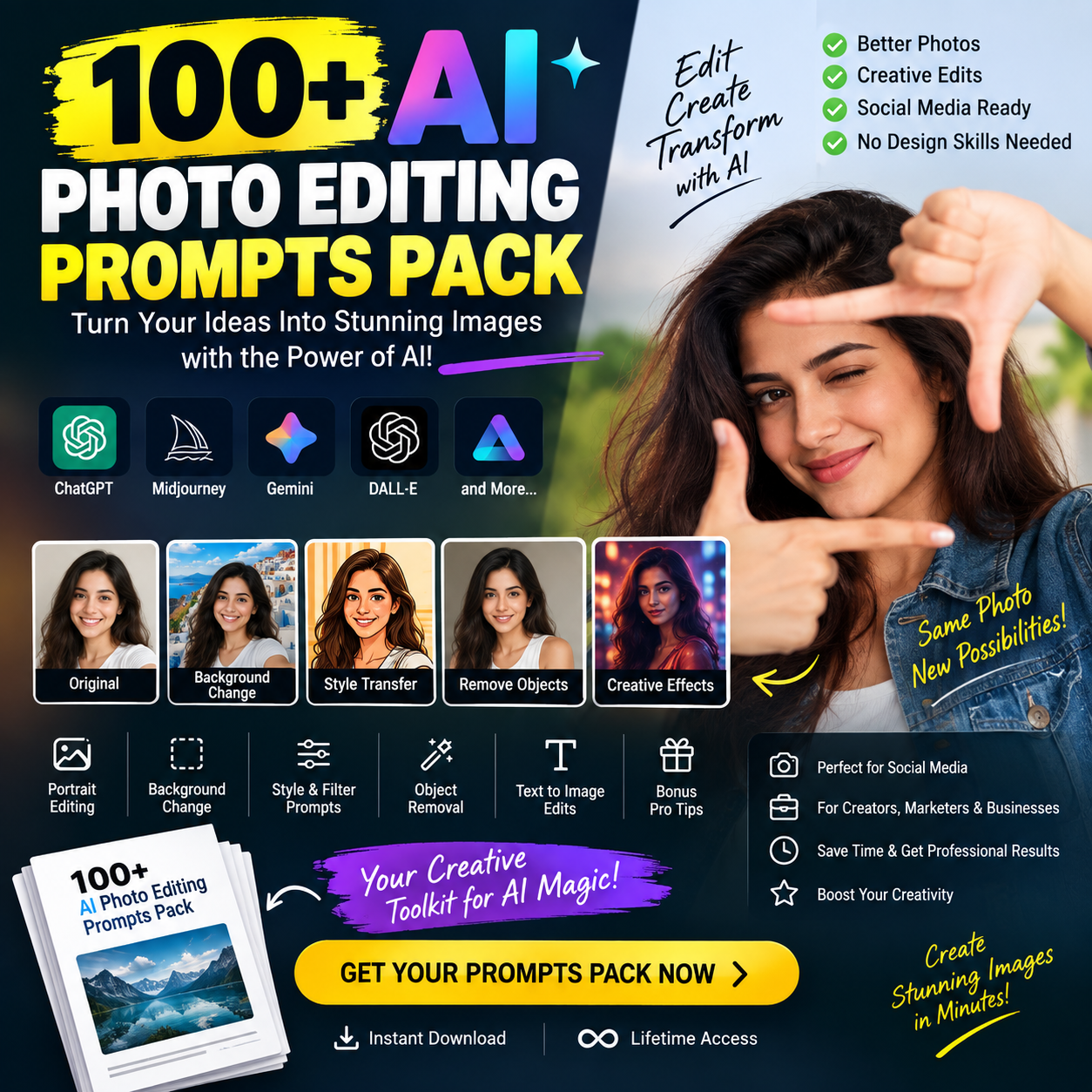
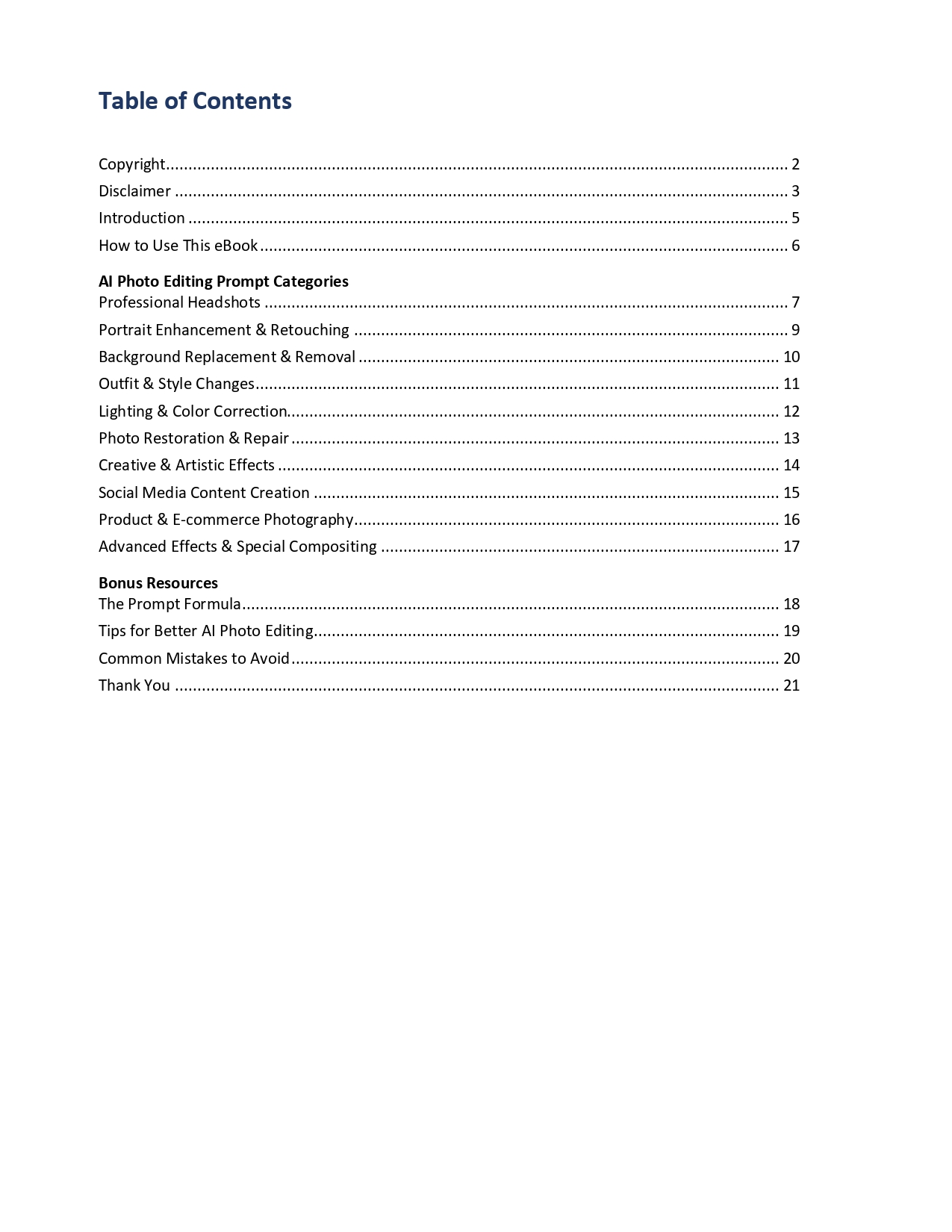
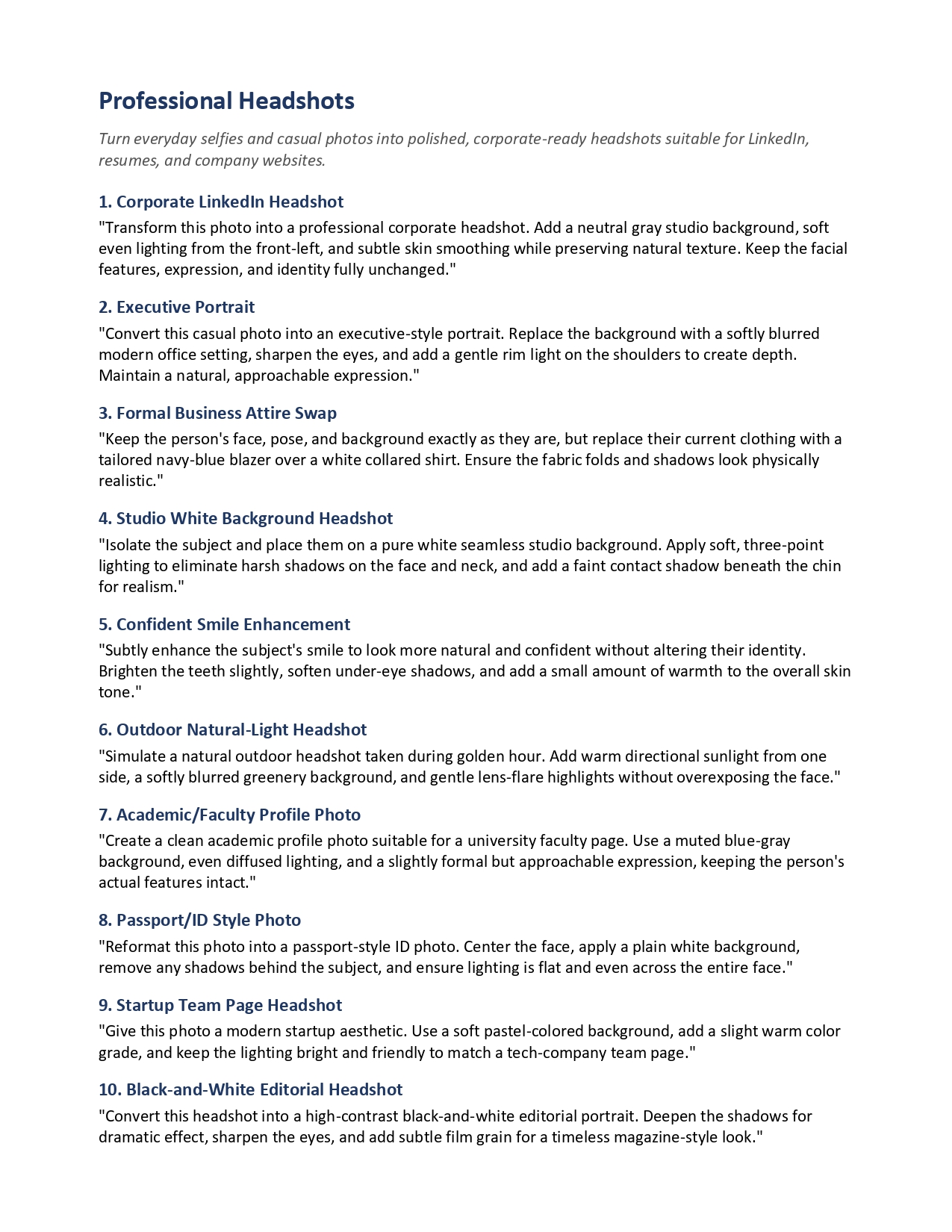
100+ AI Photo Editing Prompts Pack (Instant Download)
Copy-paste prompts for ChatGPT & Gemini photo edits
- 100+ copy-paste prompts across 8 categories: portraits, Instagram trends, backgrounds, product shots, restoration, creative styles, text-on-image and ad creatives
- The 6-part prompt formula with worked examples
- Follow-up prompts to fix likeness, lighting and background issues
- Aspect-ratio cheat sheet for every social and ad placement
Look inside
Secure Razorpay checkout One-time payment, lifetime accessInstant download
How to market a digital product
Building is 30% of the work. This is the other 70%.
Organic (slow, compounding)
- Write the article your buyer searches before they buy. A guide that ranks sells the product inside it for years.
- Give away a smaller version free in exchange for an email or WhatsApp number, then sell the paid one.
- Post the output of your product, not the product. Screenshots of results beat screenshots of files.
- Answer questions in the communities where your buyer already is.
Paid (fast, needs margin)
- Retarget people who viewed the product page — cheapest converting audience you'll ever have.
- Test three angles, not three colours: the problem, the outcome, the objection.
- With a ₹499 product, your cost per sale has to stay under roughly ₹150 to be worth scaling. If it doesn't, raise the price or bundle before you raise the budget.
If you're new to paid, our performance marketing guide and the conversion tracking guide are the two things to read before you spend anything.
8 mistakes that kill digital product sales
- Building for months before selling anything. Ship in a week, improve from feedback.
- Too broad. "Marketing templates" has no buyer. "Meta Ads reporting sheet for agencies" does.
- No preview. People will not pay for a file they cannot see inside.
- A page full of features, no outcome. Say what changes for them, then list what's inside.
- Hiding the refund terms. Digital purchases are usually final — say it clearly and up front.
- Manual delivery. Emailing files yourself breaks the moment you sleep or go viral.
- Only one product. The second product is usually sold to the person who bought the first.
- Zero distribution plan. If you can't name the exact channel that brings the first ten buyers, you're not ready to launch.
No signup, instant score. Answer all 7 and check where you stand.
Your digital product launch checklist
Work top to bottom. Your progress is saved on this device.
Ticks are saved in this browser — come back and pick up where you left off.
Related reading
- 25 e-commerce business ideas you can start in India
- E-commerce website development cost in India
- Best e-commerce platform in India
- ChatGPT photo editing prompts
The honest summary
Digital products are the cheapest business to start and the hardest to get noticed. The file is not the asset — the audience is.
So pick one narrow problem you have already solved. Build the smallest useful version this week. Put it on a real store with instant delivery. Get ten people to pay for it. Everything else — the bundles, the course, the membership, the second product — is built on top of those first ten sales.
Glossary
- Digital Product
- A product delivered electronically — a file, download or online access — that can be sold unlimited times without producing another physical unit.
- Digital Download
- The most common delivery format: the buyer receives a file (PDF, ZIP, template link) immediately after payment.
- SaaS (Software as a Service)
- Software sold as a recurring subscription and used in the browser rather than installed and bought once.
- Licence
- The terms that state what a buyer may do with your file — personal use, commercial use, or resale. Digital products are licensed, not really 'sold'.
- Evergreen Product
- A digital product that stays useful for years with only small updates, so it keeps earning without being rebuilt.
- Lead Magnet
- A free digital product given in exchange for an email address or phone number, used to sell a paid product later.
- Order Bump
- A small add-on offered at checkout (e.g. a ₹199 bonus pack) that raises average order value at almost no cost.
- OIDAR
- Online Information and Database Access or Retrieval services — the Indian GST classification that covers most automated digital product sales.
- Royalty
- The per-download or per-sale share a marketplace pays you for stock media, ebooks or assets you have uploaded to it.
- Digital Rights / File Protection
- Measures like watermarking, expiring download links and download limits that reduce casual sharing of your paid files.
Sources & Further Reading
Frequently Asked Questions
What is a digital product?+
A digital product is something you create once and deliver electronically — a file, a download or online access — so it can be sold to an unlimited number of buyers without producing another unit. Ebooks, Notion and Excel templates, online courses, mobile apps, Lightroom presets, stock photos, AI prompt packs, printable planners and software subscriptions are all digital products. Because there is no stock, packaging, courier or warehouse, the gross margin is typically 90–98% and the buyer receives it within seconds of paying.
What are the main types of digital products?+
The twelve types that cover almost everything sold today: ebooks and guides, templates, online courses, memberships and communities, software and SaaS, mobile apps, photo presets and video LUTs, stock media, AI prompt packs and AI assets, printables, audio products, and licensed digital assets such as fonts, UI kits and code. Most successful sellers start with a template, printable or prompt pack because those take days to build, then move up to a course or membership once they know who is buying.
Are digital products actually profitable?+
The margin is excellent — usually 90–98%, because reproduction costs nothing. Profit, though, depends entirely on distribution. A ₹499 pack sold thirty times a month is ₹14,970 in near-pure profit; the same pack with no audience earns nothing. Budget your effort accordingly: roughly 30% on building the product and 70% on getting it seen through content, email, SEO or ads.
What are the best digital products to sell for beginners?+
Start with something you can finish in under a week and that solves one narrow problem: a niche Notion or Excel template, a printable planner, a Canva template pack, a photo-preset pack, a prompt pack for a specific job, or a short paid guide. Avoid a full course or a software tool as a first product — both take months and you learn nothing about demand until they are done.
Do I need GST registration to sell digital products in India?+
It depends on your turnover, whether you sell through a marketplace, and whether you sell to buyers outside your state or outside India. Automated digital sales fall under the OIDAR category for GST purposes, and marketplaces generally require a GSTIN before you can list. Because thresholds and rules change, confirm your specific case on the official GST portal or with a CA before your first sale rather than after.
Can I sell digital products without a website?+
Yes. Gumroad, Etsy, Amazon KDP, Topmate, Instamojo and even a WhatsApp catalogue with a UPI payment link will get you started, and a marketplace also brings its own traffic. The trade-off is fees of roughly 5–30% and, more importantly, that the platform keeps the customer relationship. Most sellers start on a marketplace to validate and then move buyers to their own store, where the payment gateway takes about 2% and the email list is theirs.
How much should I charge for a digital product in India?+
Price on the outcome, not the number of pages. In India the ₹99–₹999 band is an impulse purchase that needs almost no persuasion, ₹1,499–₹4,999 works for courses, toolkits and anything with a clear money or time saving, and above ₹5,000 you generally need live access, personal support or a proven track record. Bundling two or three related products at a higher price is usually easier than raising the price of a single one.
How do I stop people from sharing or pirating my files?+
You cannot prevent it completely, so design around it. Use expiring download links, cap downloads per order, watermark previews, keep the highest-value part of the offer in something that cannot be copied — updates, a community, live sessions or support — and price so honest buyers do not feel punished. In practice, most sellers lose far more revenue to obscurity than to piracy.
Join our live training program and become a performance marketing professional.